New year, new reading list! Here are 10 books on genetics and genomics for my 2025. I hope that one or two will pique your interest too!
These books are accounts of, reflections on, predictions about our genome and the ones of other animals. Fellow readers, learn about the powers and limitations of genes, the history of genetics (and the dark chapter of eugenics), the genetic accidents fuelling evolution, the many links to our ancestors, the uses and quandaries of today’s genetic technologies from personalised medicine to reproductive science, and the opportunities and the perils ushered by genetic engineering.
Here we go…
PS: PS: if you are looking for SciFI instead, visit my list of 15 biotech/biology SciFi books of the past 25 years!
1 The Genetic Book of the Dead: A Darwinian Reverie, by Richard Dawkins
Extinct species aren’t really dead, they live in the genomes of their descendants.
Synopsis: Over millions of years, genetic sequences are added, removed and overwritten, leading to the emergence of new species. You might assume that as the edits accumulate, the history of earlier species is erased, much like overwriting a file on a computer erases the original data. This is not the case, Dawkins argues: the DNA of modern animals and plants retains a full description of their ancestors. Reading the genomes of today’s organisms, future scientists will reveal the physical attributes, behaviours and environments of long-extinct species.
Author bio: Richard Dawkins is an acclaimed evolutionary biologist, zoologist and science communicator. His most famous book, “The selfish gene”, popularised a new way to think about evolution.
Year of publication: 2024.

2 Understanding The Nature‒Nurture Debate, by Eric Turkheimer
To what extent do genes determine human behaviours?
This is what genetics has to say.
Synopsis: There was once a debate: do genes (nature) or environment (nurture) make us who we are? Both, we respond nowadays. But which is the dominant force, nature or nurture? Turkheimer guides the reader through this intricate debate, from its origins to modern studies on human genetics. Examining concepts such as heritability, quantitative trait loci (QLT) and polygenic scores, we learn what genetics has to say on human intelligence, sexual orientation and mental disorders.
Author bio: Turkheimer is a professor at the University of Virginia (USA), where he studies how interactions between genes and environments shape the development of human behaviour.
Year of publication: 2024.

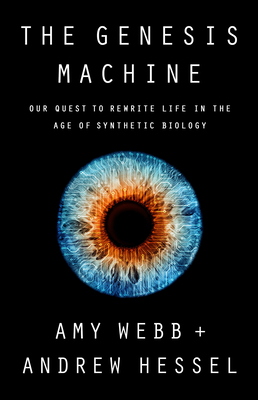
3 The Genesis Machine: Our Quest to Rewrite Life in the Age of Synthetic Biology, by Amy Webb and Andrew Hessel
This is how writing DNA code will rewrite our world,
for better and for worse….
Synopsis: DNA is the software that makes its own hardware, the code that builds the machine running it. The latest biotechnologies, the genesis machine, will empower us to write new DNA code, and so to create new living beings, organisms we designed. How will our world change? This is the future according to Webb and Hessel, with its hopes (food for everyone, no more diseases and pandemics, control over climate change) and perils (the rich becoming richer and the poor poorer, biohacking, lethal bioweapons able to kill millions).
Author bio: Webb is the founder and CEO of Future Today Institute, an advisory firm, and an adjunct assistant professor at NYU Stern School of Business. Hessel is a pioneer in synthetic biology; he co-founded Humane Genomics, a company that makes RNA viruses to kill cancer cells.
Year of publication: 2022.
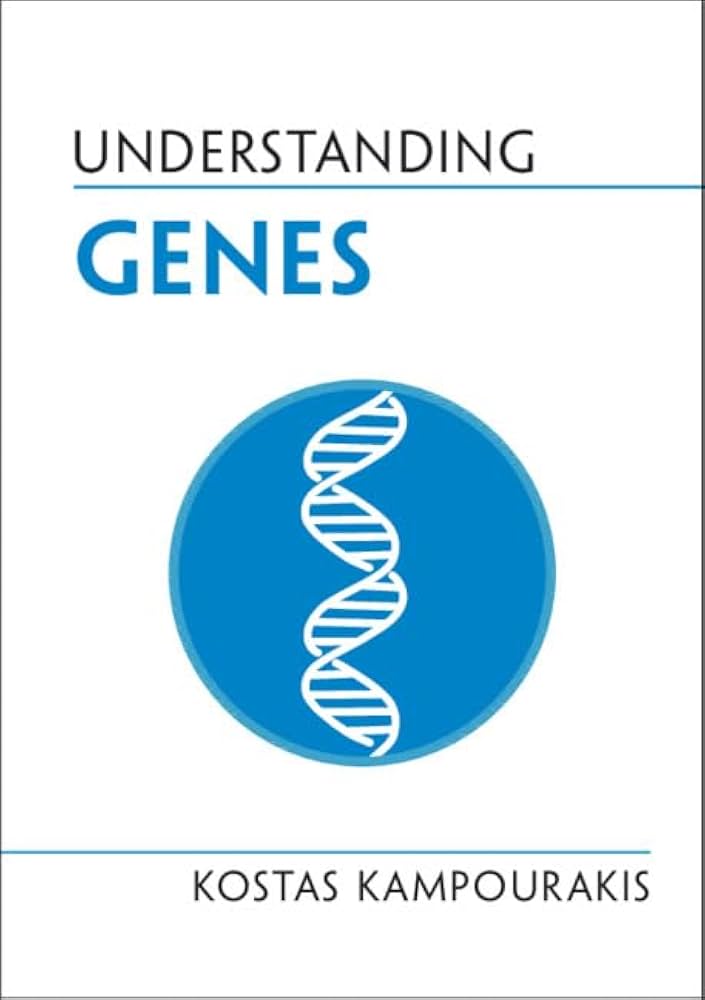
4 Understanding Genes, by Kostas Kampourakis
Genes are not everything, unlike these misconceptions would make you believe.
Synopsis: genes alone explain human actions, development and diseases, a certain view on life claims. Kampourakis surely doesn’t agree. He explains what genes are and do, and, most importantly, what they are not and what they don’t do. He emphasises how there is no gene for any given trait, nor for any disease, not even for monogenic disorders—to learn more about them, read my first blog post. And why we cannot understand genetics without epigenetics.
Author bio: Kampourakis is a researcher at the University of Geneva, where he teaches evolution and genetics. He is the awarded author of several books on these topics for non-experts, and an editor.
Year of publication: 2021.
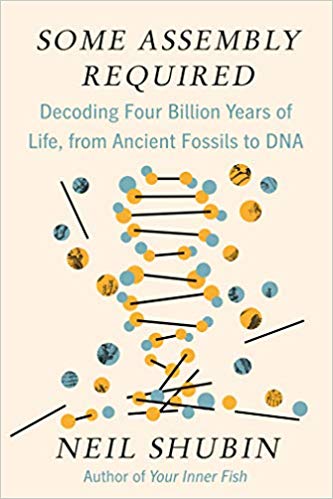
5 Some Assembly Required: Decoding four Billion Years of Life, from Ancient Fossils to DNA, by Neil Shubin
Evolution isn’t an engineer, but a tinkerer. These are the quirky genomic accidents fuelling such a creative process.
Synopsis: Evolution doesn’t create from scratch, rather, it tweaks existing structures and repurpose them to serve a new function. This tinkering, termed adaptation, is a cornerstone of evolution. Shubin explains what adaptation is and how DNA is its engine. Through the pages, we encounter some of the mechanisms driving evolution, such as gene duplications, genes jumping across the genome and viruses inserting their genetic material into the host DNA.
Author bio: Shubin is a paleontologist, evolutionary biologist, and professor at the University of Chicago. He wrote many popular science book and he is the co-discoverer of Tiktaalik roseae, an extinct species that marks the transition from aquatic to terrestrial animals.
Year of publication: 2021.
6 The Genome Odyssey: Medical Mysteries and the Incredible Quest to Solve Them, by Euan Angus Ashley
The adventures of modern-daySherlock Holmes, doctors wielding the power of whole genome sequencing.
Synopsis: To create Sherlock Holmes, Sir Conan Doyle was inspired by surgeon Joseph Bell, who solved many medical cases with his power of observation. Today doctors can rely on an even sharper eye than Bell’s: they can investigate crevasses and nooks of their patients’ genomes. Through the analysis of true cases, Ashley shows how whole genome sequencing has revolutionised diagnosis and treatment. Like a modern-day Sherlock, nowadays physicians can uncover hidden clues in a patient’s DNA and solve what could have otherwise remained medical mysteries.
Author bio: Ashley is a pioneer of personalised medicine: he led the team that conducted the first clinical interpretation of a human genome. He is a professor at Stanford University.
Year of publication: 2021.

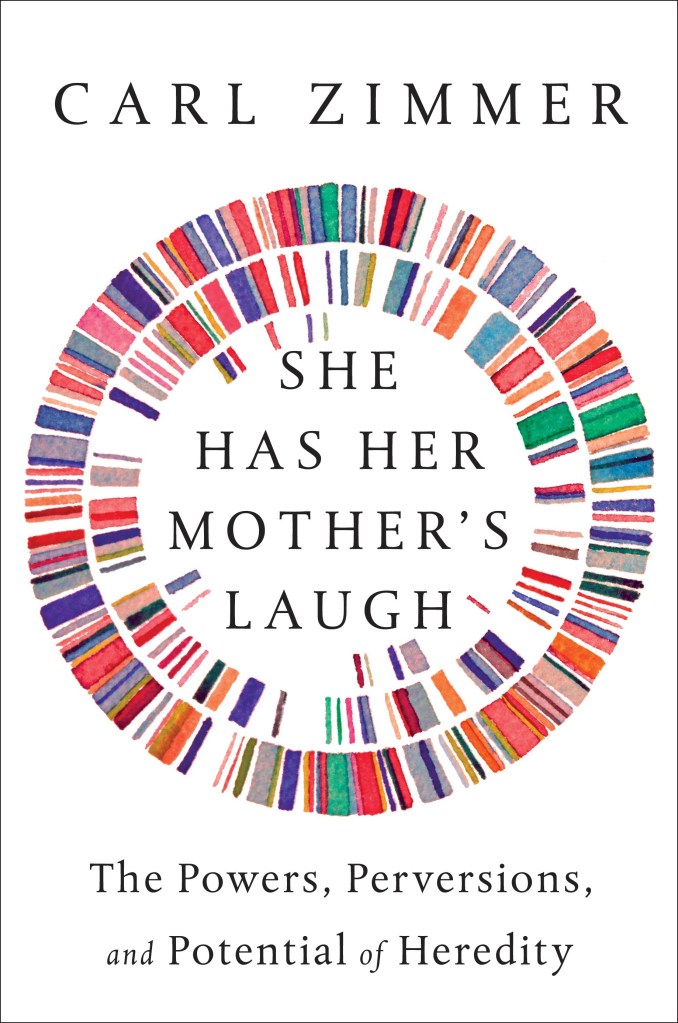
7 She Has Her Mother’s Laugh: The Powers, Perversions, and Potential of Heredity, by Carl Zimmer
Heredity speaks the language of genes, but we are who we are thanks to so much more than genetics.
Synopsis: our genomes are patchworks of DNA fragments inherited by our many ancestors. Zimmer gives us an overview of the science that shines light on heredity, from Darwin’s and Mendel’s discoveries to the attempts to shape society with eugenics, the revelation that we carry Neanderthal DNA, and today’s genetic ancestry tests available online. But heredity transcends the language of the genes, Zimmer argues. From epigenetic modifications to microbes in our guts and our culture, parents pass on their children so much more than their DNA.
Author bio: Carl Zimmer is a popular science writer, blogger, journalist. He writes of parasites, evolution, inheritance.
Year of publication: 2018.
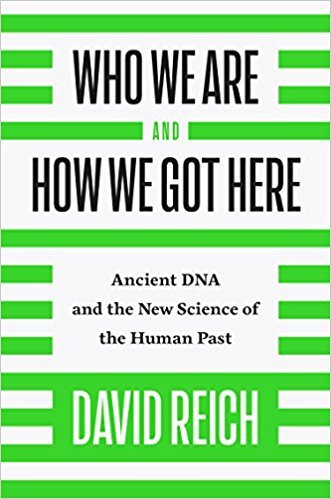
8 Who We Are and How We Got Here: Ancient DNA and the New Science of the Human Past, by David Reich
The last 5,000 years of human history as told by our genes.
Synopsis: “Tell me where you go and I’ll tell you who you are”, we say in Italy. “Tell me who you were, and I’ll tell you where you come from”, geneticists say now geneticists. Reich describes how whole genome sequencing of ancient human skeletons and modern people from different corners of the world has made it possible to retrace migrations and mixing of populations over the past 5,000 years.
Author bio: David Reich is a researcher in population genetics of ancient humans. He is a professor at Harvard Medical School.
Year of publication: 2018.
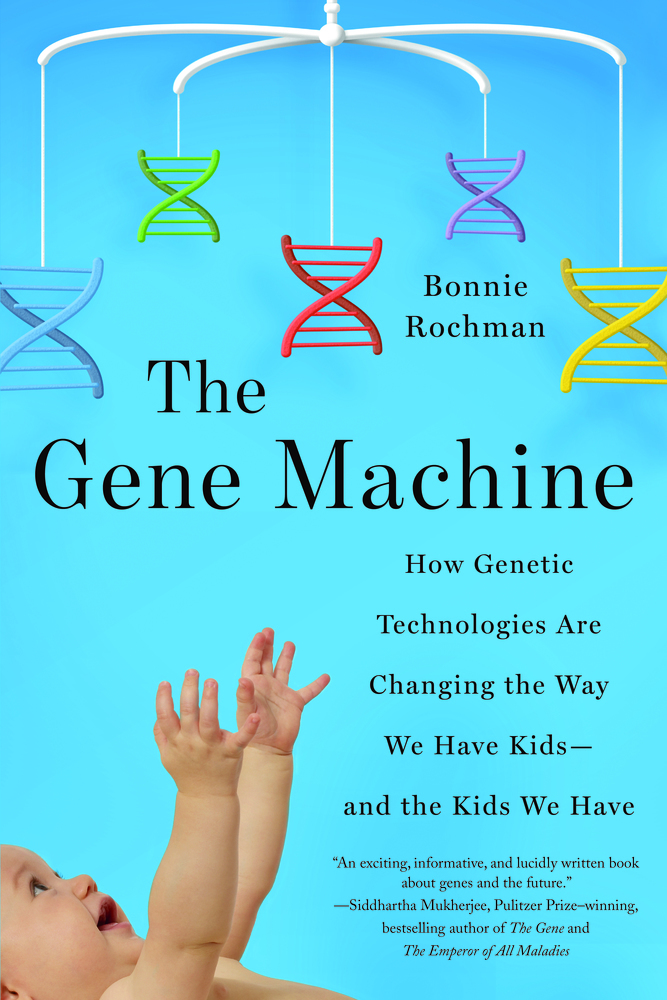
9 The Gene Machine: How Genetic Technologies Are Changing the Way We Have Kids—and the Kids We Have, by Bonnie Rochman
Genetic technologies won’t change how we have kids; they already have.
Synopsis: Genetic screenings have given us the ability to detect diseases in embryos, as they grow in the womb or even before implantation – I wrote an opinion piece for the Progress Educational Trust about an American company genetically “optimizing” a baby’s health. Interviewing physicians and researchers, Rochman introduces the readers to the technologies used for genetic testing, from chromosomal microarray to exome and whole genome sequencing. Through the words of families, genetic counselors and spiritual advisers, we hear the true stories of aspiring parents faced with the surprising revelations and ethical dilemmas that these new technologies have ushered.
Author bio: Bonnie Rochman is a journalist, and a writer and editor at Seattle Cancer Care Alliance and at the Fred Hutchinson Cancer Center.
Year of publication: 2017.
10 The Gene: an Intimate History, by Siddhartha Mukherjee
A chronicle of what a gene is, from Ancient Greece to today’s genetic engineering.
Synopsis: Mukherjee guides us from Ancient Greece—Aristotle believed blood was the key to hereditary—to the dawn of genetics, the theory of evolution, the birth of eugenics, the DNA double helix, the dawn the recombinant DNA era, the human genome project, and gene editing with CRISPR-Cas9 platform. But this book is also the intimate history of Mukherjee and his family, plagued by a form of mental illness passing through generations.
Author bio: Mukherjee is a physician, a biologist, and an author. His book “The Emperor of all Maladies: a Biography of Cancer” won the Pulitzer for General Nonfiction.
Year of publication: 2016.


 WritinGenomics
Leave a comment