Tag: pleiotropy
-
![1965 — Sequencing the First Nucleic Acid [A Chronicle of DNA Sequencing, EP1]](https://writingenomics.com/wp-content/uploads/2025/05/trna-logo.png?w=752)
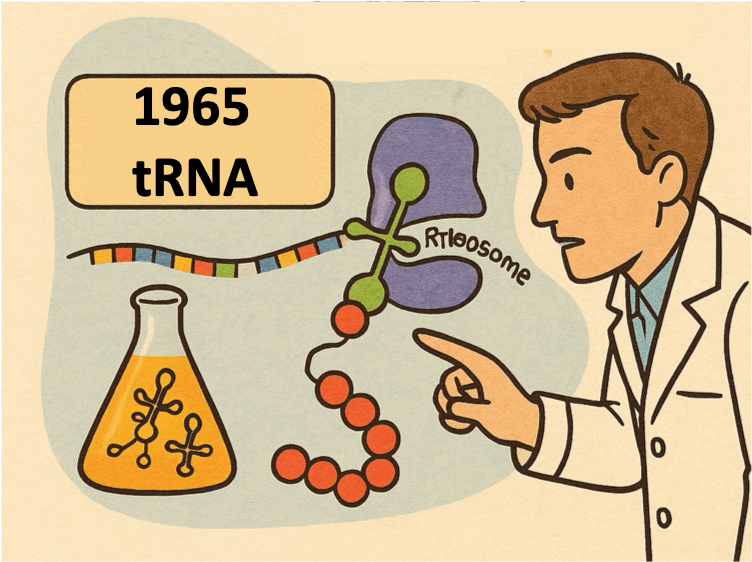
1965 — Sequencing the First Nucleic Acid [A Chronicle of DNA Sequencing, EP1]
The history of DNA sequencing doesn’t start with DNA. No, it starts with another nucleic acid, RNA. An RNA molecule was in fact the first nucleic acid ever sequenced—amid enormous challenges, and 140 kg of yeast. [This is Episode 1 of A Chronicle of DNA Sequencing through 5 anniversaries (1965-2015), Click me for an overview…
-

How to Quickly Decide if a Paper is a Must-Read
Too many scientific papers to read, too little time: how do you prioritise those more relevant to your research and interests? This is the approach that guides my decisions—it’s not perfect but it will help you identify which papers are must-reads and which ones… can wait (not reading a paper is also on the table!)…
-
![Homology and Similarity don’t Mean the Same Thing [Common Misconceptions in Genomics, EP. 1]](https://writingenomics.com/wp-content/uploads/2025/04/homology-vs-similiarity.png?w=1024)
Homology and Similarity don’t Mean the Same Thing [Common Misconceptions in Genomics, EP. 1]
Note: this is the first instalment in my series “Common Misconceptions in Genomics“. One of the most misunderstood relationships in genetics, and the whole biology? The confusing relation between homology and similarity. “The proteins show a low degree of homology”; “the genes are highly homologous”. These are two examples of how NOT to talk of…
-

Genomic Giants: the Largest Genomes on Earth
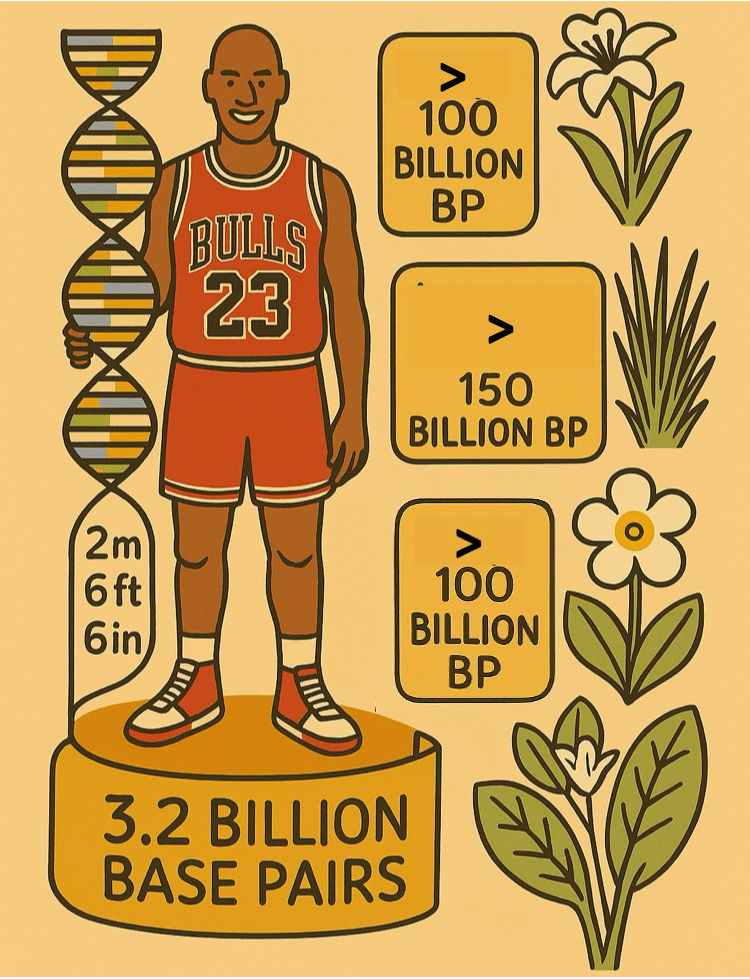
Unroll our genome and you get a Michael Jordan! If we could unwind the 3.2 billion base pairs (bp) of our genome, it would stretch across 2 meters, 6 feet 6 inches, the height of the NBA icon. Humans pack a mind-blowing amount of DNA in their cells, and yet this is just a fraction…
-

Are you a Scientific or a Science Writer?
Are you a scientific or a science writer?Short answer: it depends on your audience. Scientific writers: we address scientists, researchers. We write articles for specialized peer-reviewed journals such as Science, university textbooks, research grants, reports and protocols, and communications with regulatory agencies. Our writings are highly technical and detailed, because our readers are familiar with…
-

The complexity of “simple” genetic disorders: penetrance, expressivity, pleiotropy
This is a paradox of rare diseases: they are gaining more and more attention, and yet, a big misunderstanding still surrounds many of them. These misunderstood diseases, known as monogenic disorders, are the ones caused by mutations in a single gene. Clarifying this confusion is crucial for patients, their families, clinicians, researchers and the general…