Tag: DNA
-
![1975 — Learning to Read DNA [A Chronicle of DNA Sequencing, EP3]](https://writingenomics.com/wp-content/uploads/2025/12/logo.png?w=956)
1975 — Learning to Read DNA [A Chronicle of DNA Sequencing, EP3]
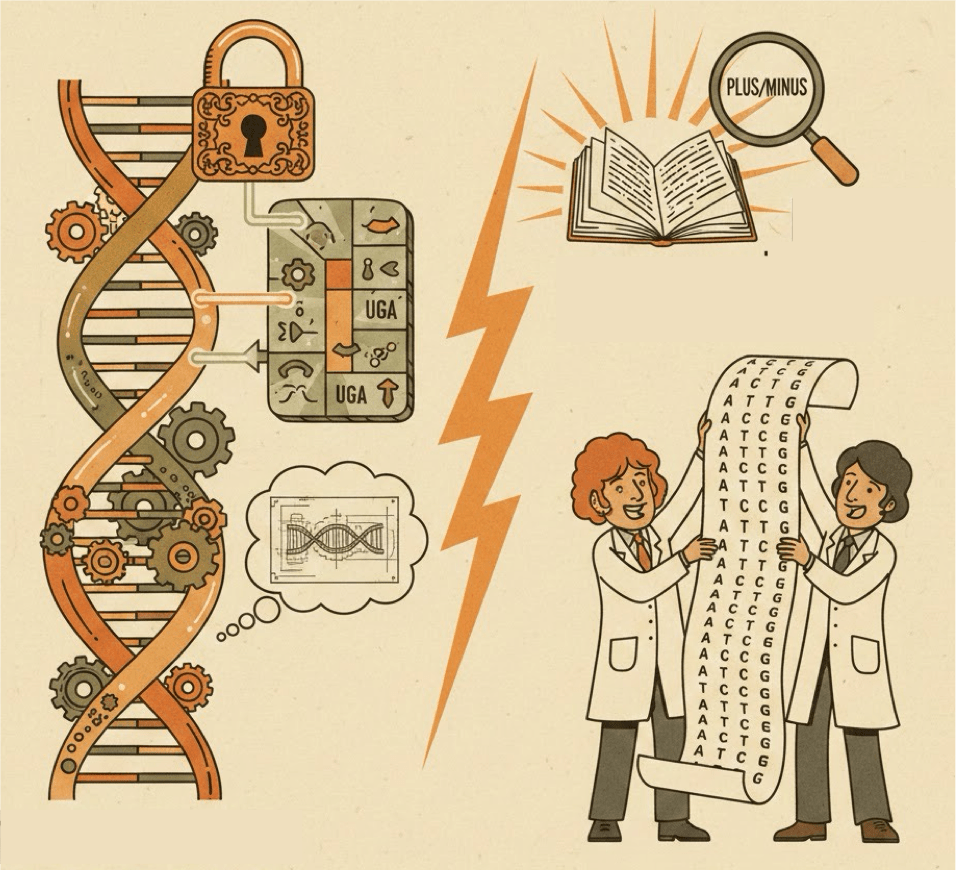
In the early 1970s, life scientists faced a paradox: they could interpret the language of the DNA, but they couldn’t read it. How could that be? Years of ingenious research had cracked the genetic code, revealing which nucleotide triplets code for which amino acid. This meant that scientists could predict a protein’s sequence from a…
-
![1965 — Deciphering the Code of Life [A Chronicle of DNA Sequencing, EP2]](https://writingenomics.com/wp-content/uploads/2025/10/picture-1.jpg?w=309)
1965 — Deciphering the Code of Life [A Chronicle of DNA Sequencing, EP2]
Life doesn’t have an alphabet, but two: that of DNA and that of proteins. The genetic code is the Rosetta stone of molecular biology: it lays out how cells convert one alphabet into another — three bases into a single amino acid, but never the reverse. These rules were first summarised in a historic chart…
-
![rRNA, tRNA, tsRNA [How many types of ncRNA do you know? Ep. 1/7]](https://writingenomics.com/wp-content/uploads/2025/08/ep1-trna-rrna-tsrna.png?w=1024)
rRNA, tRNA, tsRNA [How many types of ncRNA do you know? Ep. 1/7]
Welcome to the universe of non-coding RNAs! This is a gigantic realm – our cells transcribe over 75% of the genome into RNAs that are never translated! [1, 2] – where the unknown is not just around the proverbial corner, but it often stares you straight in the eyes… Over the next few weeks, I’ll…
-

15 Bio/Biotech SciFi Novels From the Past 25 Years
I’ll keep it short: I have compiled a list of science fiction novels about biology and biotechnology from the past 25 years (2000-2025). They touch and revolve around many themes dear to us, such as genetic engineering, paleogenetics, evolutionary leaps, retroviruses, symbiotes, consciousness, induce pluripotent stem cells, and polygenic scores. Enjoy a cool bionerd read…
-
![The Central Dogma of Molecular Biology is not What You Think [Common Misconceptions in Genomics, EP. 3]](https://writingenomics.com/wp-content/uploads/2025/06/dre.png?w=1024)
The Central Dogma of Molecular Biology is not What You Think [Common Misconceptions in Genomics, EP. 3]
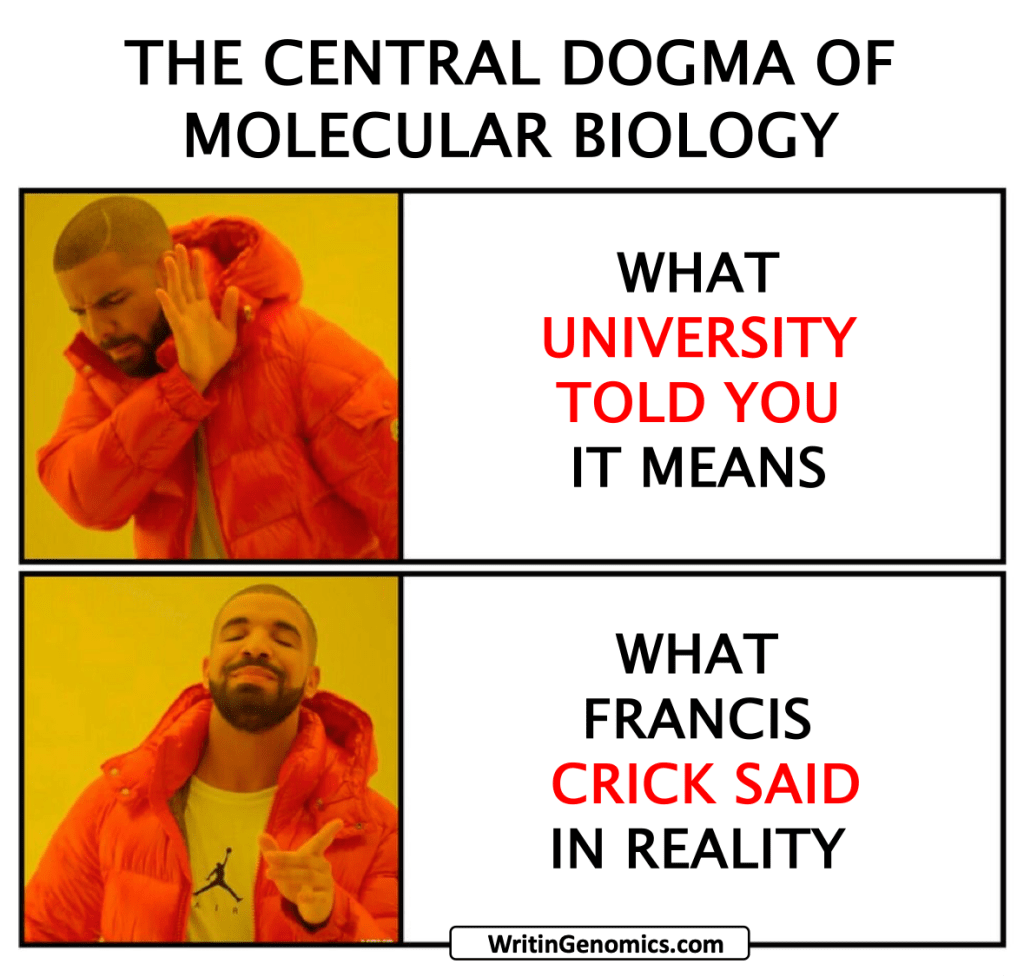
Like many of you, I believed I knew the Central Dogma of molecular biology: DNA→ RNA→Protein. I was wrong. Somewhat shocked, I learned what it really means only last week, after digging in a paper older than my dad – I am a sucker for the history of science… Funnily enough, textbooks are probably responsible…
-
![Not All Exons Code for a Protein [Common Misconceptions in Genomics, EP. 2]](https://writingenomics.com/wp-content/uploads/2025/06/figure0.png?w=931)
Not All Exons Code for a Protein [Common Misconceptions in Genomics, EP. 2]
No, not all exons code for a protein. Far from it. This week’s post will disprove this common misconception by illustrating three core principles in molecular biology. Each one is enough to convince you that not every exon codes for a protein. Together, they will reveal a surprising truth: coding exons are a minority, actually.…
-
![1965 — Sequencing the First Nucleic Acid [A Chronicle of DNA Sequencing, EP1]](https://writingenomics.com/wp-content/uploads/2025/05/trna-logo.png?w=752)
1965 — Sequencing the First Nucleic Acid [A Chronicle of DNA Sequencing, EP1]
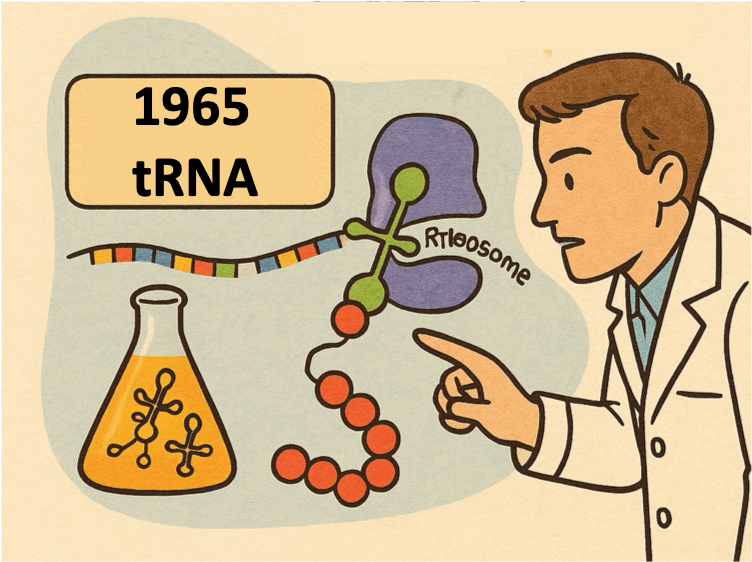
The history of DNA sequencing doesn’t start with DNA. No, it starts with another nucleic acid, RNA. An RNA molecule was in fact the first nucleic acid ever sequenced—amid enormous challenges, and 140 kg of yeast. [This is Episode 1 of A Chronicle of DNA Sequencing through 5 anniversaries (1965-2015), Click me for an overview…
-

A Chronicle of DNA Sequencing in 5 Anniversaries (1965-1995)
This year marks the anniversary of 5 milestones, between 1965 and 1995, that made DNA sequencing possible. Thanks to these advances, we have started unlocking the genome and deciphering its secrets. Over the following months, we’ll explore a different milestone every month—in a summary on LinkedIn and in an in-depth article here. We’ll travel from…
-

How 14 Cell Lines got their Quirky Names
How did 14 cell lines get their quirky names? Most likely, you worked with them, maybe you still are using them in your experiments. If you ever wondered how they got their names, I got you covered. 1 HeLa Human cervical cancer cell line It owes the name to Henrietta Lacks. Without her permission, cells…
-
Ten Genomic Reads for My 2025
New year, new reading list! Here are 10 books on genetics and genomics for my 2025. I hope that one or two will pique your interest too! These books are accounts of, reflections on, predictions about our genome and the ones of other animals. Fellow readers, learn about the powers and limitations of genes, the…