Navigating quirky trivia, milestones and misconceptions of genomics – and reflecting on science communication and the research process.
-
Like many of you, I believed I knew the Central Dogma of molecular biology: DNA→ RNA→Protein. I was wrong. Somewhat shocked, I learned what it really means only last week, after digging in a paper older than my dad –…

-
To die because of your research. Or wondering if you will in a decade.
You may have read the harrowing story of Émilie Jaumain on my blog or elsewhere. It is a tragic and infamous case, many have covered it. But there is another deeply unsettling case that may have happened, another story of…

-
More Engagement with Cunningham’s Law? Thanks, but No Thanks
Want more views, clicks, engagement online? Cunningham’s law may hold the key—but at a cost I’m not willing to pay. Are you? Cunningham’s law (it’s an observation actually) highlights a common internet phenomenon: if you have a question, don’t ask…

-
Not All Exons Code for a Protein [Common Misconceptions in Genomics, EP. 2]
No, not all exons code for a protein. Far from it. This week’s post will disprove this common misconception by illustrating three core principles in molecular biology. Each one is enough to convince you that not every exon codes for…

-
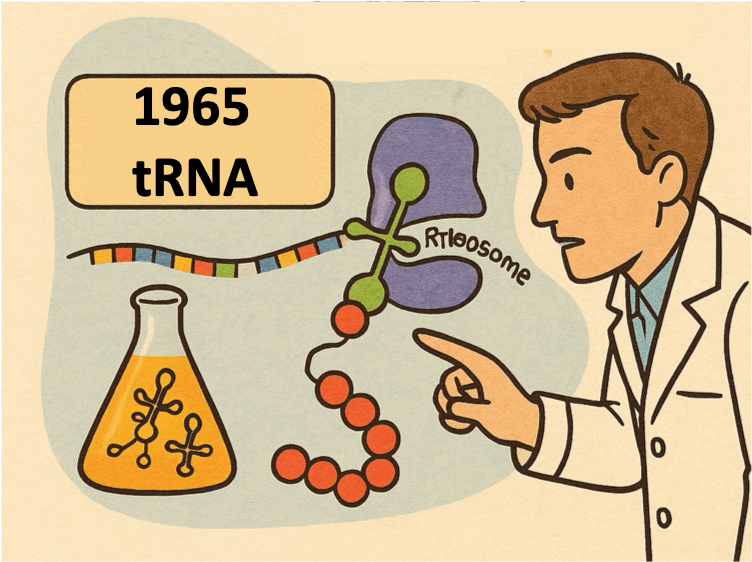
1965 — Sequencing the First Nucleic Acid [A Chronicle of DNA Sequencing, EP1]
The history of DNA sequencing doesn’t start with DNA. No, it starts with another nucleic acid, RNA. An RNA molecule was in fact the first nucleic acid ever sequenced—amid enormous challenges, and 140 kg of yeast. [This is Episode 1…

-
A Chronicle of DNA Sequencing in 5 Anniversaries (1965-1995)
This year marks the anniversary of 5 milestones, between 1965 and 1995, that made DNA sequencing possible. Thanks to these advances, we have started unlocking the genome and deciphering its secrets. Over the following months, we’ll explore a different milestone…

-
How 14 Cell Lines got their Quirky Names
How did 14 cell lines get their quirky names? Most likely, you worked with them, maybe you still are using them in your experiments. If you ever wondered how they got their names, I got you covered. 1 HeLa Human…

-
How to Quickly Decide if a Paper is a Must-Read
Too many scientific papers to read, too little time: how do you prioritise those more relevant to your research and interests? This is the approach that guides my decisions—it’s not perfect but it will help you identify which papers are…

-
Homology and Similarity don’t Mean the Same Thing [Common Misconceptions in Genomics, EP. 1]
Note: this is the first instalment in my series “Common Misconceptions in Genomics“. One of the most misunderstood relationships in genetics, and the whole biology? The confusing relation between homology and similarity. “The proteins show a low degree of homology”;…

-
Genomic Giants: the Largest Genomes on Earth
Unroll our genome and you get a Michael Jordan! If we could unwind the 3.2 billion base pairs (bp) of our genome, it would stretch across 2 meters, 6 feet 6 inches, the height of the NBA icon. Humans pack…