Category: DNA
-
![1975 — Learning to Read DNA [A Chronicle of DNA Sequencing, EP3]](https://writingenomics.com/wp-content/uploads/2025/12/logo.png?w=956)
1975 — Learning to Read DNA [A Chronicle of DNA Sequencing, EP3]
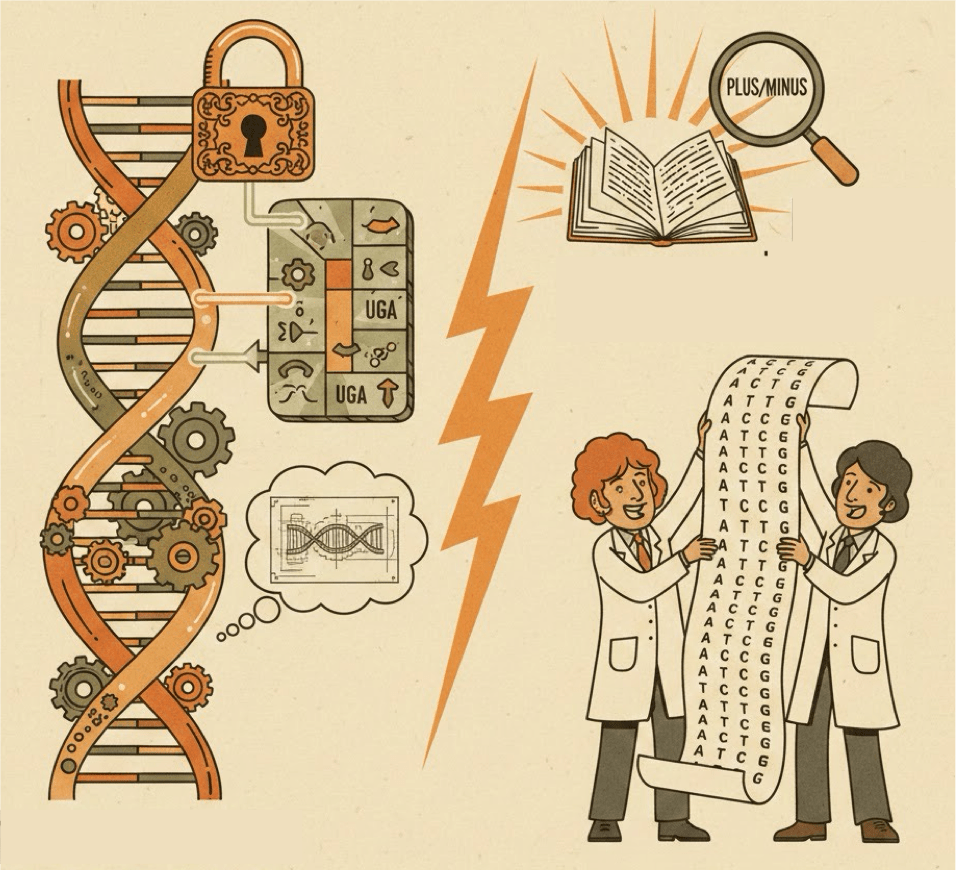
In the early 1970s, life scientists faced a paradox: they could interpret the language of the DNA, but they couldn’t read it. How could that be? Years of ingenious research had cracked the genetic code, revealing which nucleotide triplets code for which amino acid. This meant that scientists could predict a protein’s sequence from a…
-

10 Genetic Disorders with Bizarre Names
From werewolves to men made of stones, some genetic disorders have not just puzzled scientists and doctors in recent times, but they have also caught the imagination of laypeople through the centuries. This is a list of 10 genetic disorders with bizarre common names, usually given because of a weird, and often life-threatening if not…
-
![1965 — Deciphering the Code of Life [A Chronicle of DNA Sequencing, EP2]](https://writingenomics.com/wp-content/uploads/2025/10/picture-1.jpg?w=309)
1965 — Deciphering the Code of Life [A Chronicle of DNA Sequencing, EP2]
Life doesn’t have an alphabet, but two: that of DNA and that of proteins. The genetic code is the Rosetta stone of molecular biology: it lays out how cells convert one alphabet into another — three bases into a single amino acid, but never the reverse. These rules were first summarised in a historic chart…
-
![The Central Dogma of Molecular Biology is not What You Think [Common Misconceptions in Genomics, EP. 3]](https://writingenomics.com/wp-content/uploads/2025/06/dre.png?w=1024)
The Central Dogma of Molecular Biology is not What You Think [Common Misconceptions in Genomics, EP. 3]
Like many of you, I believed I knew the Central Dogma of molecular biology: DNA→ RNA→Protein. I was wrong. Somewhat shocked, I learned what it really means only last week, after digging in a paper older than my dad – I am a sucker for the history of science… Funnily enough, textbooks are probably responsible…
-
![Not All Exons Code for a Protein [Common Misconceptions in Genomics, EP. 2]](https://writingenomics.com/wp-content/uploads/2025/06/figure0.png?w=931)
Not All Exons Code for a Protein [Common Misconceptions in Genomics, EP. 2]
No, not all exons code for a protein. Far from it. This week’s post will disprove this common misconception by illustrating three core principles in molecular biology. Each one is enough to convince you that not every exon codes for a protein. Together, they will reveal a surprising truth: coding exons are a minority, actually.…
-
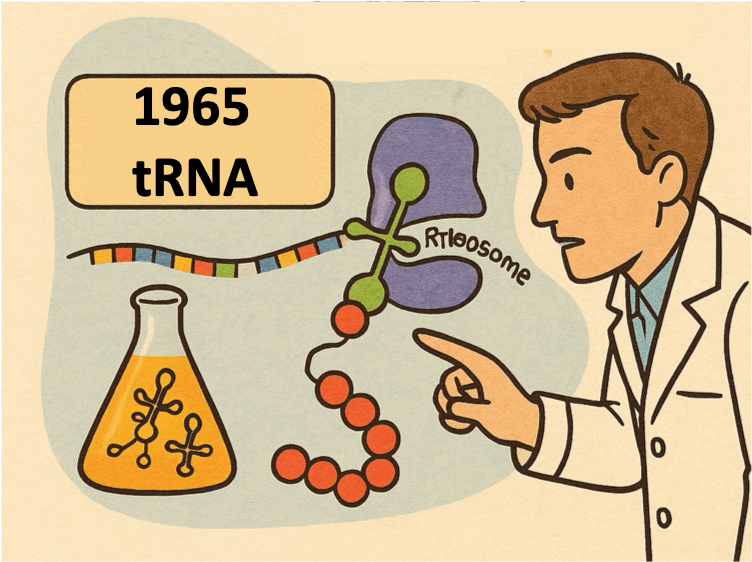
![1965 — Sequencing the First Nucleic Acid [A Chronicle of DNA Sequencing, EP1]](https://writingenomics.com/wp-content/uploads/2025/05/trna-logo.png?w=752)
1965 — Sequencing the First Nucleic Acid [A Chronicle of DNA Sequencing, EP1]
The history of DNA sequencing doesn’t start with DNA. No, it starts with another nucleic acid, RNA. An RNA molecule was in fact the first nucleic acid ever sequenced—amid enormous challenges, and 140 kg of yeast. [This is Episode 1 of A Chronicle of DNA Sequencing through 5 anniversaries (1965-2015), Click me for an overview…
-

A Chronicle of DNA Sequencing in 5 Anniversaries (1965-1995)
This year marks the anniversary of 5 milestones, between 1965 and 1995, that made DNA sequencing possible. Thanks to these advances, we have started unlocking the genome and deciphering its secrets. Over the following months, we’ll explore a different milestone every month—in a summary on LinkedIn and in an in-depth article here. We’ll travel from…
-
![Homology and Similarity don’t Mean the Same Thing [Common Misconceptions in Genomics, EP. 1]](https://writingenomics.com/wp-content/uploads/2025/04/homology-vs-similiarity.png?w=1024)
Homology and Similarity don’t Mean the Same Thing [Common Misconceptions in Genomics, EP. 1]
Note: this is the first instalment in my series “Common Misconceptions in Genomics“. One of the most misunderstood relationships in genetics, and the whole biology? The confusing relation between homology and similarity. “The proteins show a low degree of homology”; “the genes are highly homologous”. These are two examples of how NOT to talk of…
-

Genomic Giants: the Largest Genomes on Earth
Unroll our genome and you get a Michael Jordan! If we could unwind the 3.2 billion base pairs (bp) of our genome, it would stretch across 2 meters, 6 feet 6 inches, the height of the NBA icon. Humans pack a mind-blowing amount of DNA in their cells, and yet this is just a fraction…
-

Ten Questions about Rare Disease Day (Feb. 28)
1) Why February 28?Actually, Rare Disease Day takes place on February 29, in leap years—the rarest day of the calendar is a fitting choice to highlight the rarity of these diseases. In non-leap years, such as 2025, it occurs on February 28 instead. 2) Who picked this date?Rare Disease Day was established by EURORDIS, the…