From werewolves to men made of stones, some genetic disorders have not just puzzled scientists and doctors in recent times, but they have also caught the imagination of laypeople through the centuries.
This is a list of 10 genetic disorders with bizarre common names, usually given because of a weird, and often life-threatening if not fatal, symptom (disorder number 10 is the exception to this rule!)
Let’s discuss these diseases, the origin of their names and the genetic causes.
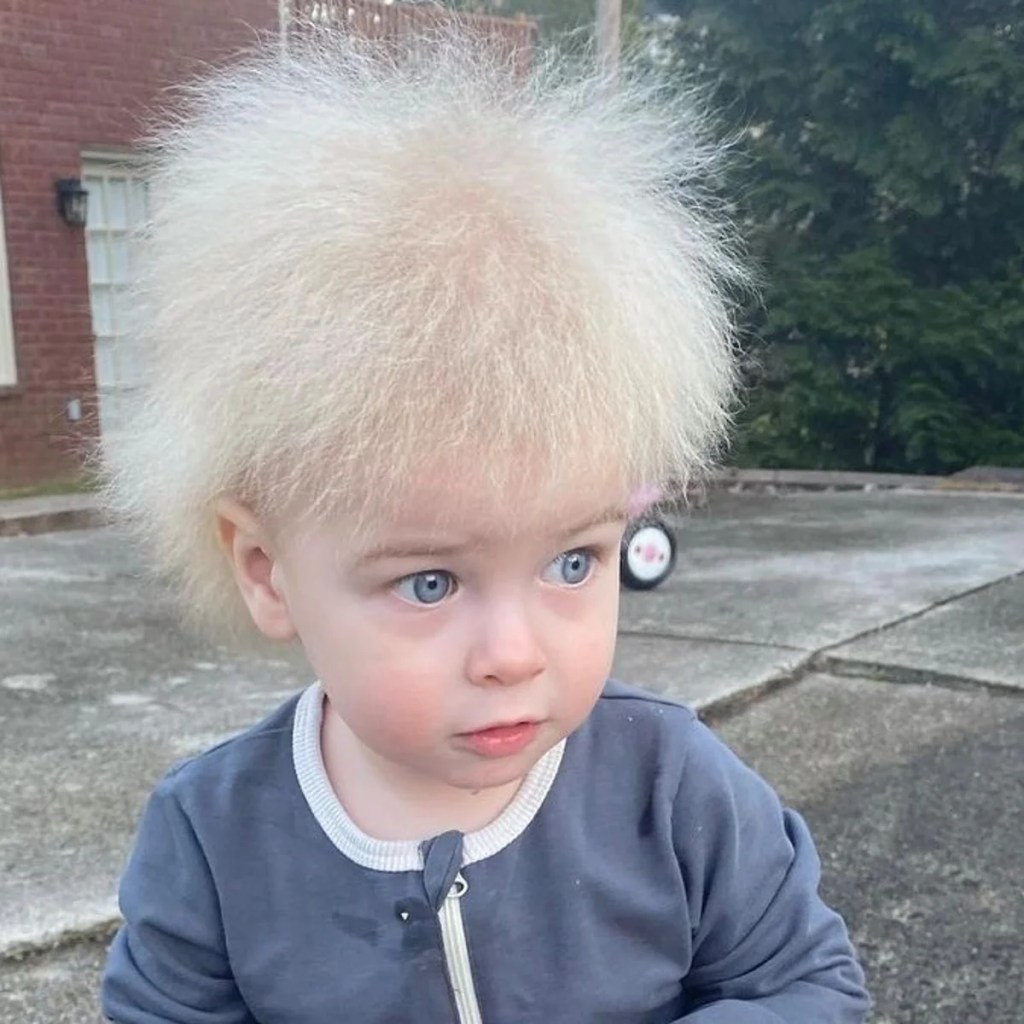
1. UNCOMBABLE HAIR SYNDROME
Scientific name: pili trianguli et caniculi.
Symptoms: blond, silvery or straw-coloured scalp hair growing in different directions. Hair appear wiry, fizzy, dry. The condition affects children, and it regresses in late childhood, often becoming barely recognisable in adults.
Name origin: hair cannot be combed flat.
Genetics: mutations in the PADI3, TGM3 or TCHH genes, which codes for proteins involved in the formation of the hair shaft. Mutations in these genes result in forms of the syndrome that are inherited in an autosomal recessive pattern. However, a dominant pattern of inheritance has been reported in some cases. In these instances, no causative genes have been identified to date.
2. WEREWOLF SYNDROME
Scientific name: hypertrichosis.
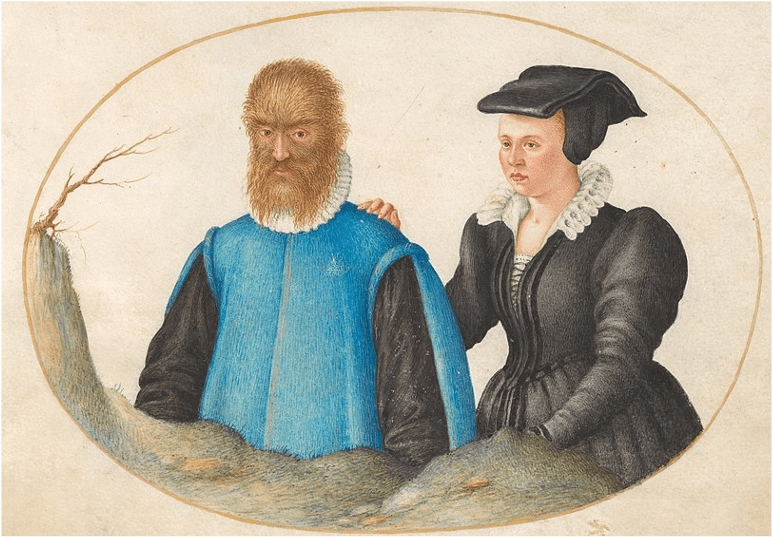
Symptoms: excessive hair growth over the face and the whole body.
Name origin: in older times, the patients’ hairy appearence fostered in many the belief that those affected were wolf-men or werewolves.
Genetics: rearrangements in autosomal or sex chromosomes, but not defined genetic element to date. Hypertrichosis can also be the result of certain cancers or of use of certain drugs.
3. CAT EYE SYNDROME
Scientific name: Schmid–Fraccaro syndrome.
Symptoms: heart, eye and anal defects, cleft palate, short stature, mild intellectual disability in ~30% of cases.
Name origin: in half the cases, an abnormal iris (the coloured part of the eye) makes the pupil (the black part) look elongated, like that of cats.
Genetics: the entire short arm and part of the long arm of chromosome 22 are present in two extra copies in 90% of patients (partial tetrasomy) or in one additional copy in the remaining cases (partial trisomy). The defects are thought to stem from an imbalance in gene dosage.

4. STONE MAN SYNDROME
Scientific name: Fibrodysplasia Ossificans Progressiva.
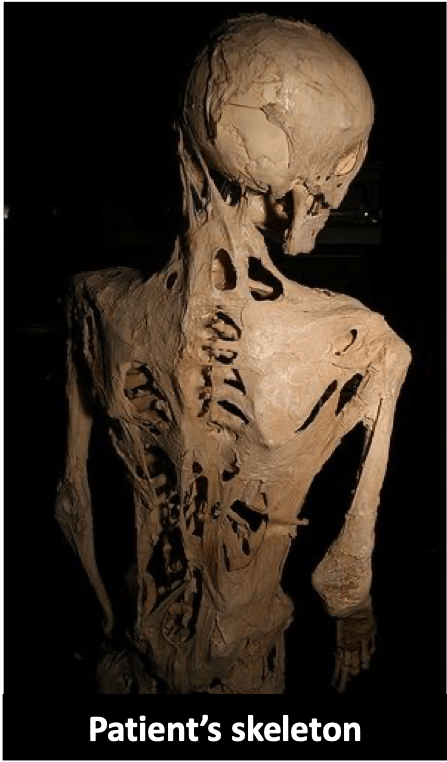
Symptoms: fibrous tissues (muscles, tendons, ligaments) turn progressively into bones that fuse with the existing skeleton.
Name origin: patients become trapped into fixed positions as if they are turning into stone.
Genetics: mutations in the ACVR1 gene causing an over-activation of the receptor protein it encodes. This drives progenitor cells in fibrous tissue to differentiate in bone-forming cells.
5. BUBBLE BOY SYNDROME
Scientific name: severe combined immunodeficiency (SCID).
Symptoms: life-threatening infections by germs that are harmless to most. This fragility is due to the inability to create B and/or T cells, main arms of the adaptive immune system.
Name origin: SCID patient David Vetter, a child who lived in a sterile plastic environment to his death at 12.
Genetics: various forms due to mutations in at least 15 genes that are critical for the development, maturation and function of cells of the immune system. The pattern of inheritance can be X-linked recessive or autosomal recessive.

6. BUTTERFLY SYNDROME
Scientific name: epidermolysis bullosa.
Symptoms: soft touches, heat may cause patients’ skin to blister and peel off, throughout the whole body and mucous membranes (most severe forms) or in local areas like knees (least severe).
Name origin: patients’ skin is as fragile as the wings of a butterfly.
Genetics: mutations in one of at least 20 genes that code for proteins securing the outermost layer of skin to the layer underneath. The identity of the gene mutated determines form, severity and pattern of inheritance of the disease (autosomal or X-linked, dominant or recessive).
7. CRI DU CHAT (CRY OF THE CAT) SYNDROME
Scientific name: 5p minus syndrome.
Symptoms: severe intellectual disabilities, behavioural problems, mutism, small head and unusual facial features (eyes far apart, small jaw, round face).
Name origin: infants have a distinctive high-pitched wail, due to abnormal larynx and nervous system, reminiscent of cat meowing.
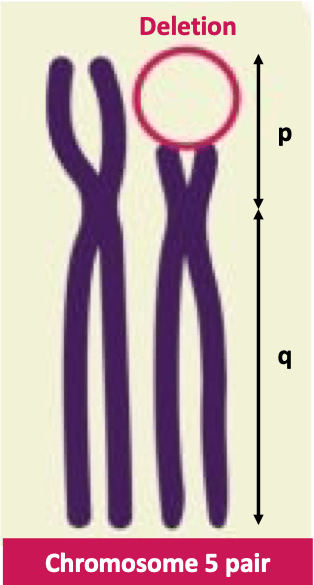
Genetics: deletion of the 10-20% most distal part of the short (p) arm of Chromosome 5. The size of the deletion may be correlated to severity of the disease.
8. FISH ODOUR SYNDROME
Scientific name: trimethylaminuria.
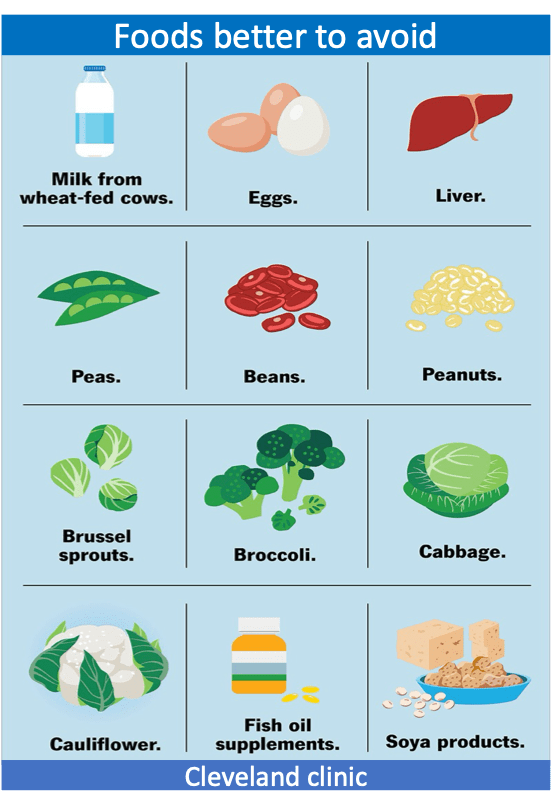
Symptoms: a strong body odour due to the inability of breaking down trimethylamine, which the gut produces when we eat some protein-rich foods.
Name origin: the buildup of trimethylamine gives patients’ sweat, urine, saliva a pungent smell of rotting fish.
Genetics: mutations in the FMO3 gene on Chromosome 1, which codes for the enzyme breaking trimethylamine down. The syndrome follows a recessive pattern of inheritance.
9. MAPLE SYRUP URINE DISEASE
Scientific name: branched-chain α-ketoacid dehydrogenase deficiency.
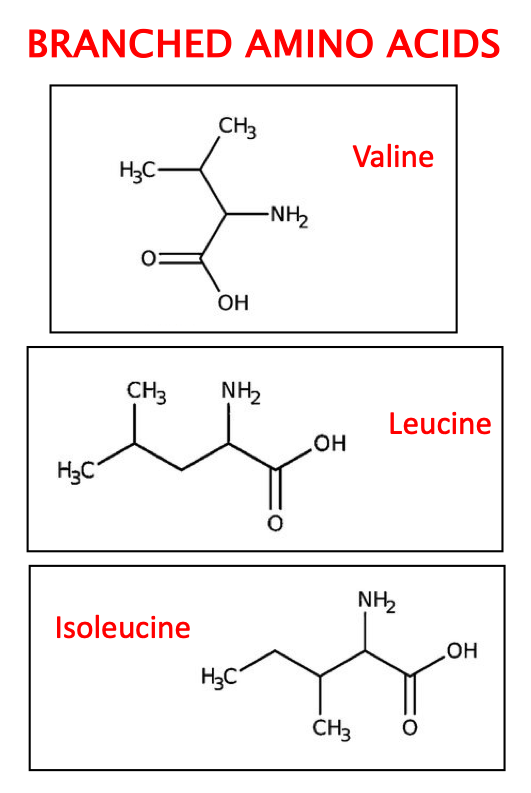
Symptoms: the disease can lead to spasms, seizures, coma and death, if left untreated. It is caused by the inability to break down the branched amino acids (valine, leucine isoleucine) in foods, which accumulate in the body.
Name origin: urine with a maple syrup odour is among the first symptoms.
Genetics: mutations in BCKDHA, BCKDHB, or DBT genes coding for the BCKD complex breaking down valine, leucine and isoleucine. The disorder follows an autosomal recessive pattern of inheritance.
10. CHRISTMAS DISEASE
Scientific name: hemophilia B.
Symptoms: prolonged and even spontaneous bleedings that can be life-threatening. The condition is due to a deficiency in factor IX, a blood clotting protein..
Name origin: Stephen Christmas was the first person diagnosed (1952).
Genetics: mutations in the F9 gene on Chromosome X that reduce level or activity of Factor IX. The disorder has a recessive pattern of inheritance.

 WritinGenomics