How did 14 cell lines get their quirky names?
Most likely, you worked with them, maybe you still are using them in your experiments. If you ever wondered how they got their names, I got you covered.
1 HeLa
Human cervical cancer cell line

It owes the name to Henrietta Lacks.
Without her permission, cells from her cervical cancer were used to establish this cell line, in 1951.
2 Hep G2
Human monocytic cell line

It owes its name to the cancer it was derived from: an hepatocellular carcinoma of Grade 2. It was isolated from the liver biopsy of a 15-yo patient.
3 MCF-7
Human breast cancer cell line

It owes the name to the Michigan Cancer Foundation, where it was established. The 7 refers to this cell line being the seventh established there.
4 THP-1
Human monocytic cell line
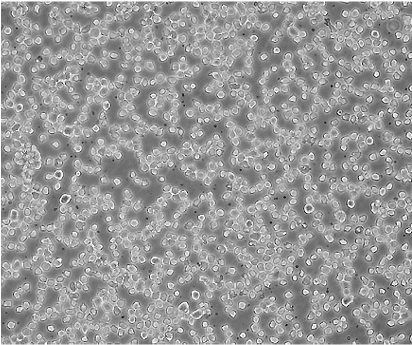
It owes its name to the Tohoku Hospital Pediatrics (Japan) where it was the 1st line derived from a 1-year old with acute monocytic leukemia.
5 HEp-2
Human epithelial cell line

It owes its name to a human epidermoid carcinoma
from which it was the 2nd line to be derived.
Later studies found that HEp-2 was contaminated with HeLa cells, from which the line actually derives.
6 HEK-293
Human embryonic kidney cell line
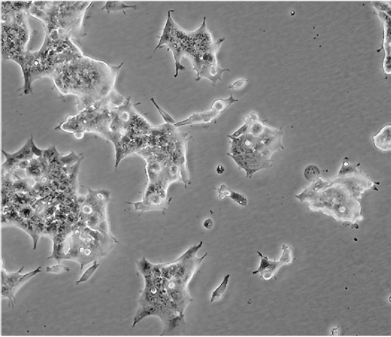
It owes the name to its origin: human embryonic kidney. It was established after 293 experiments, by postdoc Frank Graham via transformation with sheared adenovirus 5.
7 SK-N-SH
Human neuroblastoma cell line

It owes its name to where it was established, the Memorial Sloan-Kettering Cancer Center (New York), and to its neural origin. The SH remains unclear.
8 SH-SY5Y
Thrice (3X) subclone of the SK-N-SH cell line
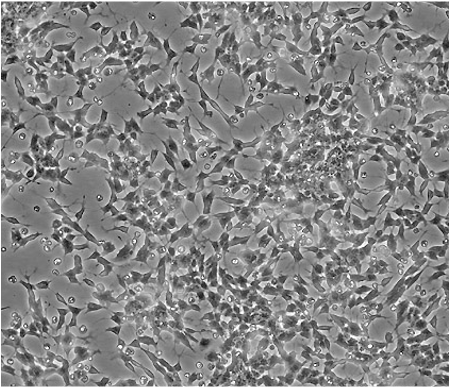
It owes its name to its generation: to reduce the heterogeneity of the SK-N-SH line, it was subcloned. The subclone SY was subcloned, and subclone 5 was subcloned once more to generate the final Y subclone.
9 MRC-5
Human fibroblast cell line

It owes its name to the Medical Research Council, where it was derived from the lung tissues of an aborted foetus. The 5 refers to this being the fifth cell strain collected.
10 Jurkat
Human T lymphocyte cell line

The origin of the name is uncertain, it was originally referred to as “JM”. It was isolated froma 14-year-old boy with acute lymphoblastic leukemia.
11 COS-7
African green monkey fibroblast cell line
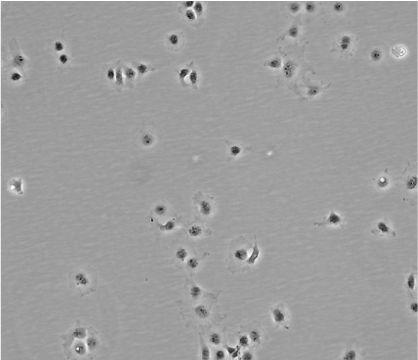
Its name is the acronym of “CV-1 in Origin carrying SV40 genetic material” as it was established from transformation of CV-1 cells with SV40 virus. The 7 refers to the clone from which it was isolated.
12 Vero
African green monkey kidney cell line
Its owes the name to the words “green kidney” in Esperanto, that is “verda reno”. Bonus:
“Vero” means “Truth” in Esperanto.
13 MDCK
Dog epithelial cell line
Its name is the acronym of “Madin-Darby Canine Kidney”. It was established from the kidney of a normal cocker spaniel in 1958.
14 NIH/3T3
Swiss mouse embryo fibroblast cell line
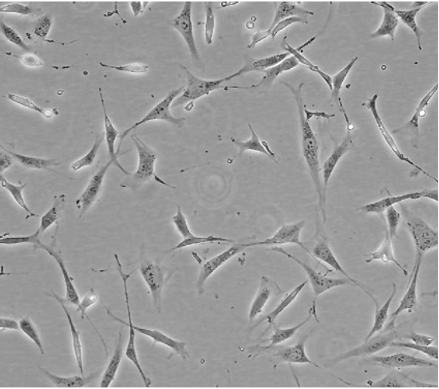
It owes its name to the requirements for cell passaging: “3-day transfer, inoculum of 3x10⁵ cells”. NIH stands for ”National Institutes of Health”

 WritinGenomics